Sector-Specific/Application-Specific Issues and Floor Requirements
Garage floors are typically exposed to heavy-duty vehicles, equipment and various chemicals. Consequently, the durability and functionality of garage concrete are of paramount importance. Below, we list the key floor requirements to be considered when refurbishing a crumbling garage floor:
- Heavy-Load Resistance: Garage floors must be able to withstand the loads carried by vehicles and heavy equipment. Consequently, the flooring material must possess high strength.
- Use of Forklifts and Pallet Trucks: If forklifts or pallet trucks are used in the garage, the floor covering must be designed to withstand the weight and movement of such vehicles.
- Moisture and Water Leaks: Garage floors must be resistant to moisture and water leaks. This ensures the floor covering has a long service life.
- Resistance to Oil and Chemicals: Oil and chemicals leaking from vehicles can cause stains and damage to the floor covering. It is therefore important that the chosen flooring material is resistant to such substances.
- Health and Safety: The floor covering must have non-slip properties and ensure health and safety. The risk of slipping increases, particularly on oily floors.
Interlocking Modular PVC & PP Floor Tile Technology and Engineering Advantages
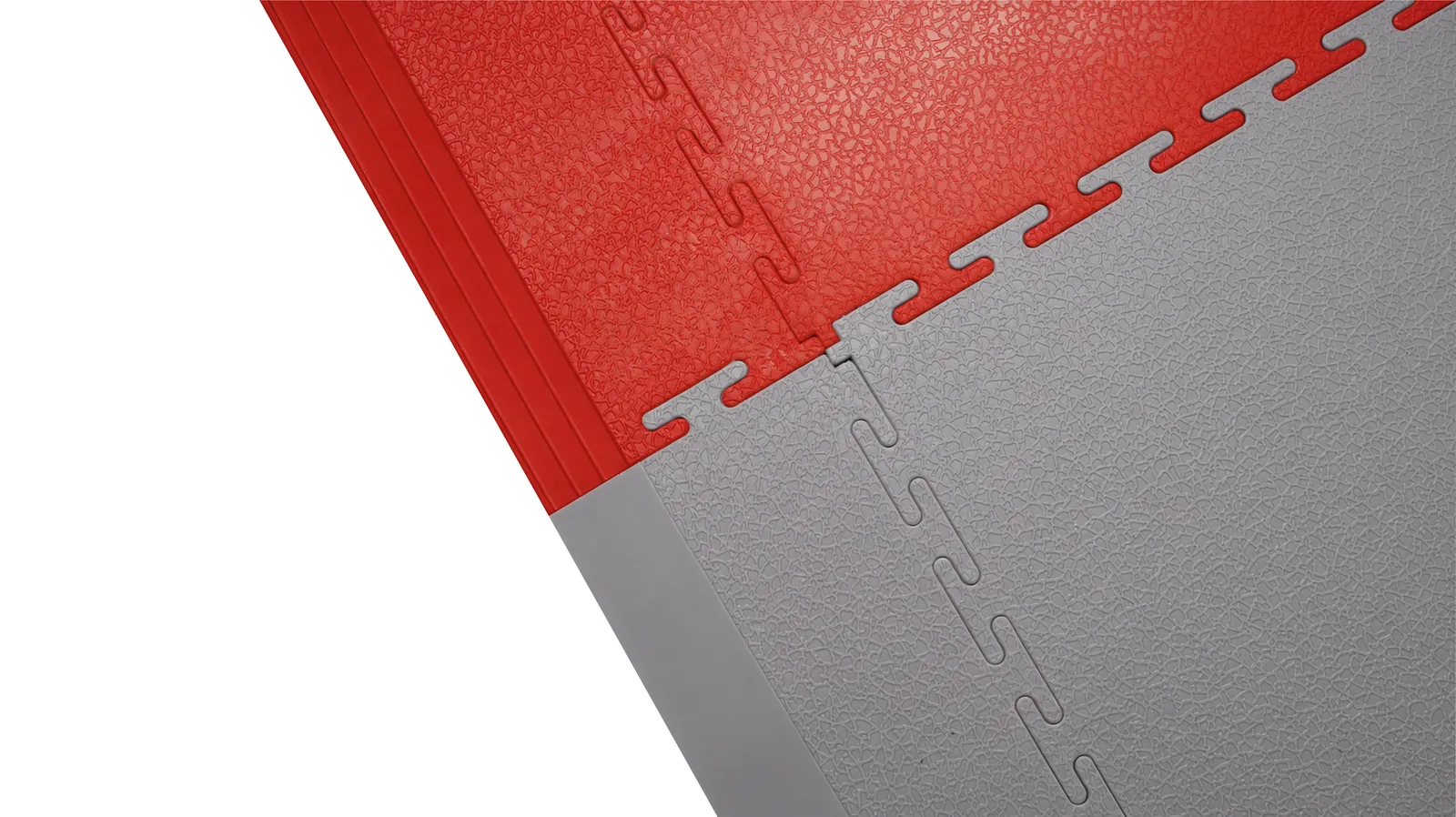
Interlocking modular PVC and PP floor tiles are an excellent solution for garage flooring. The advantages offered by this type of floor tile are as follows:
- Easy Installation: Thanks to the interlocking system, they can be installed quickly without the need for adhesive.
- Durability: PVC and PP materials do not deform even under heavy loads and are long-lasting.
- Chemical Resistance: They exhibit high resistance to oil, petrol and other chemicals.
- Sound and Thermal Insulation: Thanks to their modular structure, they provide sound insulation and prevent heat loss.
- Aesthetic Appeal: It offers an attractive appearance with a range of colour and pattern options.
Technical and Long-Term Cost Comparison with Alternative Flooring Options
| Material | Durability | Ease of Installation | Chemical Resistance | Cost (m²) | Service life |
|---|---|---|---|---|---|
| Epoxy | Good | Medium | High | 50–100 TL | 10–15 years |
| Concrete | Very Good | Average | Average | 30–60 TL | 20–30 years |
| Ceramic | Good | Difficult | High | 70–120 TL | 15–20 years |
| Polyurethane | Good | Medium | High | 60–110 TL | 10–15 years |
| Locked PVC Tiles | Very Good | Easy | High | 40–80 TL | 20+ years |
Choosing the Right ARN Floor Tiles for Your Application
Some of the various products offered by ARN Floor for garage flooring include:
- 7mm Heavy-Duty Interlocking Floor Tile, Grey – 50x50 cm, 7 mm thick, PVC material.
- 7 mm Heavy-Duty Interlocking Floor Tile, Red – 50 x 50 cm, 7 mm thick, PVC material.
- 7mm Heavy-Duty Interlocking Floor Tile, Black – 50x50 cm, 7 mm thick, PVC material.
Step-by-Step Floor Preparation, Adhesive-Free Interlocking Installation, m² Calculation and Maintenance Guide
Follow the steps below to renovate your garage floor:
- Floor Preparation: Clean any dust, grease and dirt from the existing concrete floor. The floor must be smooth.
- Installation: Carefully lay the interlocking PVC tiles onto the floor. Use edge trims to ensure a smooth transition.
- Calculation: You can use the Online m² Calculator to work out the required area.
- Maintenance: Clean the floor surface regularly. Avoid using chemicals.
Frequently Asked Questions (FAQs)
- What is the lifespan of interlocking PVC tiles?
Interlocking PVC tiles have a lifespan of over 20 years with proper maintenance.
- What should be taken into account during installation?
Ensuring the floor surface is smooth and clean are the most important points to bear in mind during installation.
- What is the chemical resistance of interlocking tiles?
Interlocking PVC tiles exhibit high resistance to oil and other chemicals.
- Which products should I choose for refurbishing a garage floor?
7mm Heavy-Duty Interlocking Floor Tiles are an ideal choice for garage floors.