Sector-Specific/Application-Specific Problems and Ground Requirements
Heavy Loads and Vehicle Traffic
Detailing workshops are typically areas where heavy vehicles and equipment are present. Therefore, when selecting a floor covering, it is important that the flooring material is capable of withstanding heavy loads. The floor must be resistant to impacts, wear and tear, and other physical stresses that may occur during vehicle traffic. Furthermore, the use of vehicles such as forklifts and pallet trucks must also be taken into account.
Moisture Resistance and Chemical Resistance
Water, detergents and various chemicals are used during detailing processes. For this reason, the floor covering must be resistant to water and chemicals. PVC and PP materials offer an ideal choice for such applications due to their waterproof properties. Furthermore, the floor covering must be slip-resistant, which is of great importance for health and safety.
Workplace Safety and Comfort
The safety of staff working in detailing studios is another important factor to consider when selecting a floor covering. The floor must have a non-slip surface and minimise the risk of falls. Furthermore, ensuring the floor covering provides a comfortable working environment will enhance staff productivity.
Locked Modular PVC & PP Floor Tile Technology and Engineering Advantages
Modular Design and Easy Installation
Interlocking modular PVC and PP floor tiles feature a design that simplifies the installation process. As these tiles are fitted by interlocking with one another, the time required to lay the flooring is significantly reduced. Furthermore, this system allows the flooring to be easily removed and reinstalled as required. Consequently, maintenance and repair work also becomes more practical.
Durability and Long Service Life
The interlocking modular floor tiles manufactured by ARN Floor boast high durability. These tiles offer a long service life thanks to their capacity to bear heavy loads. Furthermore, their resistance to UV rays and chemicals ensures long-term performance without being affected by external factors.
Aesthetics and Functionality
Aesthetics are also a key factor in detailing studios. Interlocking modular floor tiles offer an aesthetic appearance with a variety of colour and pattern options. This helps you create a space that is both functional and visually appealing, harmonising with your studio’s overall design.
Technical and Long-Term Cost Comparison with Alternative Flooring Options
| Material | Durability | Moisture Resistance | Ease of Use | Long-Term Cost |
|---|---|---|---|---|
| Epoxy | High | Medium | Medium | High |
| Concrete | Medium | Low | Medium | Low |
| Ceramic | High | High | Low | Medium |
| Polyurethane | High | Medium | Medium | High |
| Locked PVC & PP | High | High | High | Low |
The table above compares the durability, moisture resistance, ease of use and long-term costs of different flooring materials. Interlocking PVC and PP floor tiles score highest across all these criteria, making them the most suitable choice for detailed studios.
Choosing the Right ARN Floor Tile for Your Application
Recommended Products
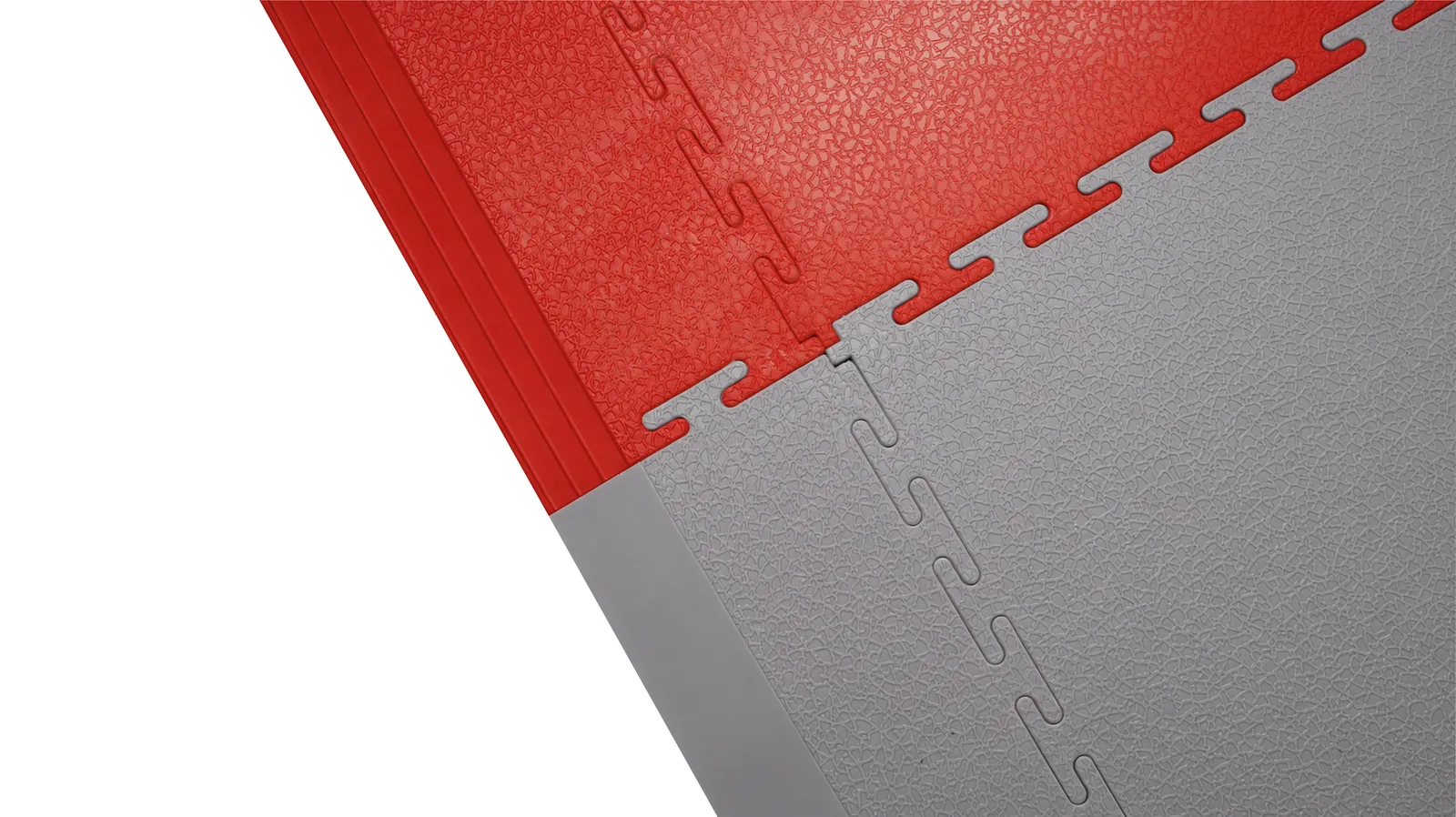
When selecting suitable floor tiles for detailing studios, it is important to consider the range of products offered by ARN Floor. For example, the 7mm Heavy-Duty Interlocking Floor Tile in Grey stands out for its heavy load-bearing capacity. This product is manufactured from PVC material, measuring 50x50 cm and 7 mm thick. Furthermore, other colour options such as the 7mm Heavy-Duty Interlocking Floor Tile – Red and the 7mm Heavy-Duty Interlocking Floor Tile – Black offer an aesthetic appearance that complements your studio’s overall design.
Dimensions and Thickness Specifications
Measuring 50x50 cm and with a thickness of 7 mm, these tiles are an ideal choice for flooring. Furthermore, they are very easy to install and can be removed and refitted as required. Thanks to these features, the time required for flooring installation is reduced and maintenance becomes more practical.
Step-by-Step Floor Preparation, Adhesive-Free Interlocking Installation, m² Calculation and Maintenance Guide
Floor Preparation
Floor preparation is one of the most important stages of the flooring installation process. Firstly, the existing floor must be cleaned and levelled. If there are any cracks, holes or damage, it is important to repair these areas. Once the floor has a smooth and clean surface, installation of the interlocking tiles can begin.
Adhesive-Free Interlocking Installation
Interlocking modular tiles can be installed without the need for adhesive. As the tiles are fitted by interlocking with one another, the installation process is quite straightforward. This feature saves time and simplifies the installation process. During installation, care must be taken to ensure the tiles are laid correctly.
m² Calculation
Before laying the floor covering, the area in m² must be calculated. You can easily determine the number of tiles you need using ARN Floor’s Online m² Calculator. This tool will automatically calculate the required quantity of tiles once you have entered your area.
Maintenance Guide
Interlocking PVC and PP floor tiles are very practical to maintain. The floor should be swept regularly and wiped with a damp cloth. You should avoid using chemical cleaning products, as these can damage the floor covering. Furthermore, it is recommended that the floor tiles be checked regularly to ensure they retain their non-slip properties.
Frequently Asked Questions (FAQs)
1. What are the advantages of interlocking PVC floor tiles?
Interlocking PVC floor tiles stand out for their easy installation, high durability and resistance to moisture and chemicals. Furthermore, their aesthetic appeal makes them an ideal choice for detailed studios.
2. What is the most suitable thickness for flooring?
The most suitable thickness for detailing studios is 7 mm. This thickness enhances durability through its capacity to bear heavy loads.
3. How long does it take to install the floor covering?
The installation of interlocking modular tiles can usually be completed within a few hours. The time required for floor preparation and installation may vary depending on the size of the area.
4. How should the floor covering be cleaned?
The floor should be swept regularly and wiped with a damp cloth. Avoid using chemical cleaning products, as these may damage the floor covering.