Sector-Specific/Application-Specific Problems and Ground Requirements
Heavy Loads and Transport Vehicles
As workshop floors are typically areas where heavy loads are moved and which are subject to intensive use, the choice of flooring material is of the utmost importance. The use of heavy-duty handling equipment, such as forklifts and pallet trucks, has a significant impact on the durability of the floor covering. Therefore, when selecting a floor covering material, it is essential to consider the material’s heavy-load-bearing capacity and wear resistance.
Moisture and Chemical Resistance
In workshops, spills of liquids, oil, chemicals and water are common occurrences. Consequently, the floor covering material must be resistant to moisture and chemicals. Materials such as PVC stand out for their durability in such environments. Thanks to their waterproof properties, these materials protect the structure beneath the floor and offer a long service life.
Health and Safety and Comfort
Workshop floors also play a significant role in terms of workplace safety. Non-slip surfaces reduce the risk of workers falling and ensure a safe working environment. Furthermore, the comfort of the flooring must also be taken into account. For workers who are on their feet for long hours, flooring that is soft yet durable enhances work productivity.
Interlocking Modular PVC Floor Tile Technology and Engineering Advantages
Easy Installation and Maintenance
Interlocking modular floor tiles offer great convenience during installation. They can be fitted quickly and practically without the use of adhesive. This feature speeds up the flooring process and reduces labour costs. Furthermore, maintaining these tiles is quite simple; with regular cleaning, they offer a long service life.
Durability and Long Service Life
PVC materials enhance the durability of the floor tiles. They exhibit high resistance to wear, impact and chemicals. Thanks to these properties, they deliver long-term performance in heavily used areas such as workshops. Furthermore, their resistance to UV rays prevents colour fading and preserves their aesthetic appearance.
A Variety of Colour and Pattern Options
Interlocking modular floor tiles meet users’ aesthetic expectations with a range of colour and pattern options. In a workshop environment, colour-coding can be used to designate different areas. This both enhances workplace safety and ensures the workspace looks organised.
Technical and Long-Term Cost Comparison with Alternative Flooring Options
| Feature | PVC/PP Floor Tiles | Epoxy Flooring | Concrete Flooring | Ceramic Flooring | Polyurethane Flooring |
|---|---|---|---|---|---|
| Durability | High | Medium | High | Medium | High |
| Chemical Resistance | High | Medium | Low | High | High |
| Ease of Installation | Easy | Difficult | Medium | Medium | Difficult |
| Ease of Maintenance | Easy | Medium | Easy | Medium | Medium |
| Cost (m²) | Medium | High | Low | High | High |
Long-Term Cost Analysis
When a long-term cost analysis is carried out, it can be seen that the initial cost of PVC floor tiles is lower than that of other types of flooring. Whilst epoxy floors stand out for their high costs and the difficulty of installation, concrete floors are generally durable but lack aesthetic appeal. Ceramic floors, on the other hand, may incur additional costs in the long term due to their fragility.
Which Type of Flooring Should Be Chosen?
When making a choice, it is important to consider the intended use of the workshop and the loads placed on the floor. In workshops carrying heavy loads, PVC floor tiles stand out as the most suitable option, whilst in areas frequently exposed to chemicals, epoxy or polyurethane floors may be preferred.
Selecting the Right ARN Floor Tile for the Application Area
Application Areas and Product Selection
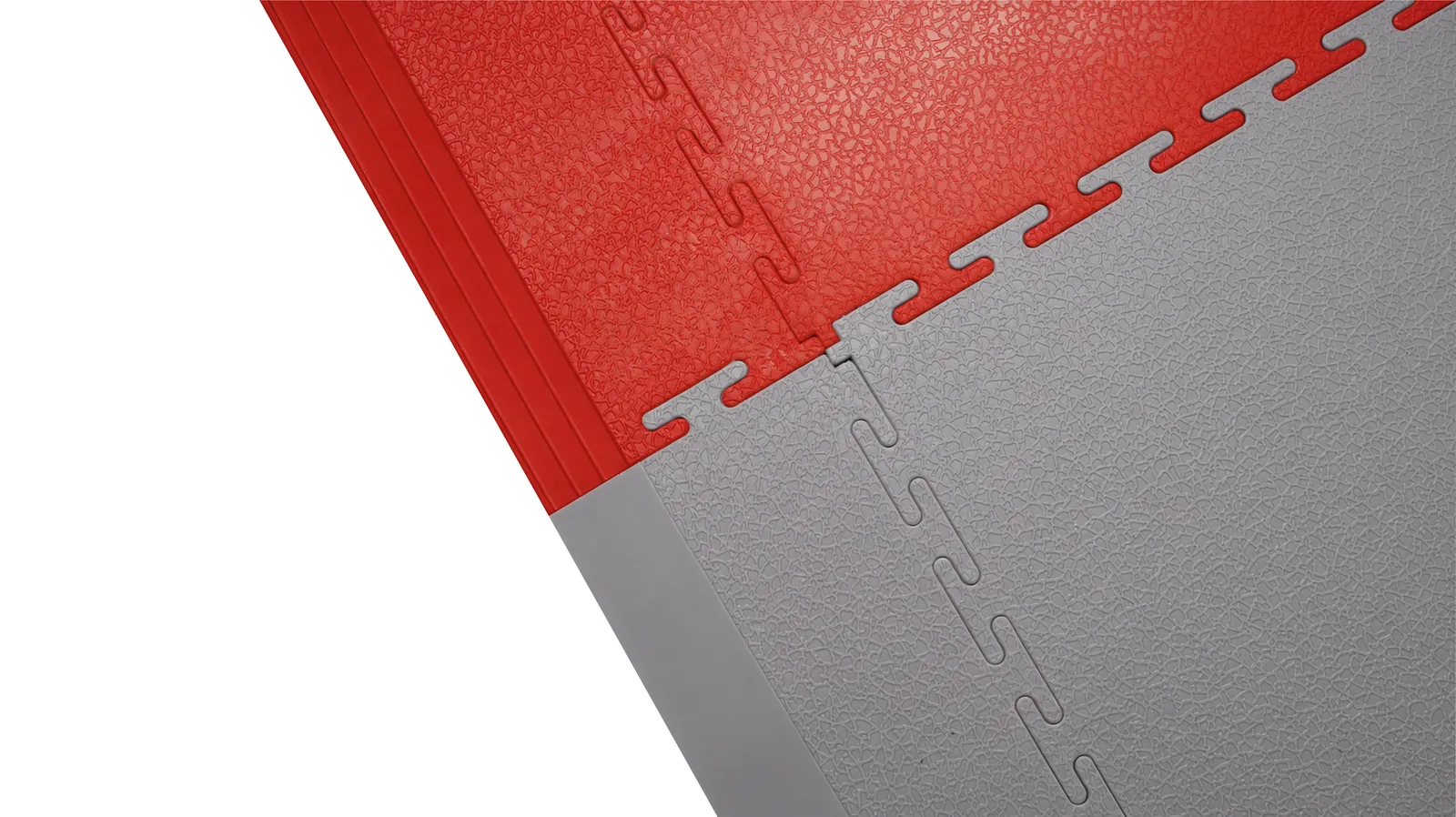
When selecting workshop flooring, ARN Floor’s 7mm Heavy-Duty Interlocking Floor Tile in Grey stands out for its heavy-load-bearing capacity and durability. Measuring 50x50 cm and 7 mm thick, this tile is a suitable option for intensive use. Additionally, the 7 mm Heavy-Duty Interlocking Floor Tile (Red) and 7 mm Heavy-Duty Interlocking Floor Tile (Black) models may also be considered.
Colour and Aesthetic Options
You can enhance the aesthetic appeal of your workshop with a range of colour options. In particular, the 7 mm Heavy-Duty Interlocking Floor Tile – Anthracite model offers a modern look, making your workspace more attractive. These products will meet your expectations in terms of both functionality and aesthetics.
Step-by-Step Floor Preparation, Adhesive-Free Interlocking Installation, m² Calculation and Maintenance Guide
Floor Preparation
Before starting the flooring installation, ensure that the existing floor surface is level and clean. Any cracks or uneven areas must be repaired and the surface levelled. You must also ensure that the floor surface is completely dry. This is important to ensure the flooring adheres properly and has a long service life.
Adhesive-Free Interlocking Installation
Interlocking modular floor tiles can be easily installed without the use of adhesive. The tiles are laid by interlocking with one another, ensuring a quick installation process. During installation, care must be taken to ensure the tiles are laid correctly. You can also enhance the aesthetic appearance of the floor covering by using corner and edge trims.
m² Calculation
To calculate the floor covering area, measure the length and width of the area and multiply them together to find the total m² value. You can carry out this calculation more conveniently using ARN Floor’s Online m² Calculator. This tool helps you work out the number of tiles you need and the associated cost.
Maintenance Guide
Regular maintenance is required to ensure the floor covering lasts for a long time. Cleaning should be carried out regularly to remove dust and dirt from the surface. Chemical substances should be avoided, and the surface must not be cleaned with abrasive cleaners. This will extend the life of the floor covering.
Frequently Asked Questions (FAQs)
1. Is it difficult to install interlocking PVC floor tiles?
Interlocking PVC floor tiles can be easily installed without the use of adhesive. This speeds up the installation process and reduces labour costs. Furthermore, no special equipment is required during installation.
2. Are PVC floor tiles resistant to chemicals?
Yes, PVC floor tiles offer high resistance to chemicals. This feature provides a significant advantage in areas where chemicals are frequently used, such as workshops.
3. What is the most suitable thickness for floor covering?
7 mm thick tiles are the most suitable option for workshop flooring. This thickness stands out for its heavy-duty load-bearing capacity and durability.
4. How often should the floor covering be cleaned?
Floor coverings must be cleaned regularly to ensure they have a long service life. It is recommended that the surface be cleared of dust and dirt at least once a week. Chemical cleaners should be avoided, and abrasive cleaners must not be used.